Posted September 8, 2026 | by James Phifer
Maybe someone asked you to run. Maybe you got frustrated enough with how things were going that you decided to do something about it. Or maybe a neighbor talked you into it over a beer at the pool, and now here you are. You’re a new HOA board member.
First, congratulations. Genuinely. The fact that you’re willing to volunteer your time to run a community your neighbors live in says something about who you are.
But I’ve also watched a lot of good people sit down in their first board meeting and immediately start doing things that make their lives harder. Not because they’re bad people. Because nobody told them what they were actually signing up for.
That’s what this is about.
A new HOA board member’s responsibilities come down to four things. Understand that the board governs while the management company executes. Read your governing documents. Route neighbor requests through process instead of handling them yourself. And accept that authority belongs to the board as a body, never to you as an individual.
Underneath all four sits the obligation that defines the role. You represent every homeowner in the community, including the ones who didn’t vote for you.
What a new HOA board member does, and what your property manager does
The most important thing I can tell you about your first week is where your role ends and your management company’s begins.
Where the board’s job ends and the manager’s begins
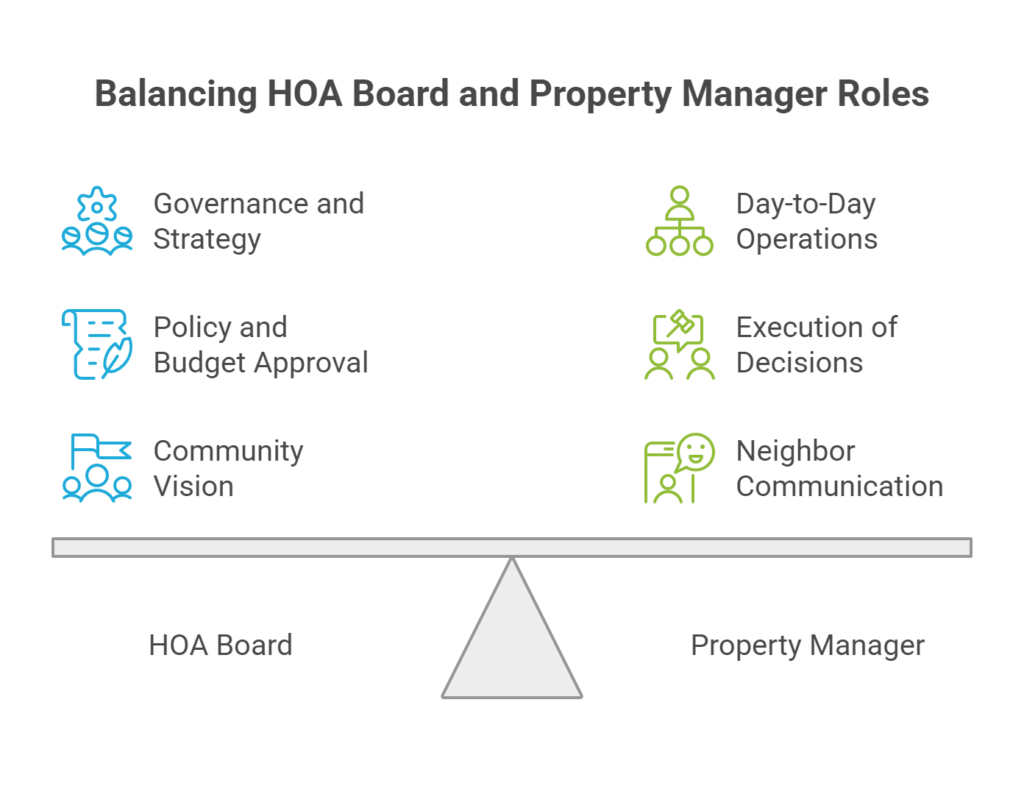
The board governs. You set policy, you approve budgets, and you make the decisions that shape what kind of community you’re going to be.
Your management company executes. It communicates, handles the day-to-day operations, and carries out what the board has decided. That’s the split, and keeping it clean is what makes everything else work.
If you want to see how that division plays out in practice, our community management services page walks through how we structure the relationship with the boards we serve.
What goes wrong when the line blurs
The failure mode is predictable. The second a new member gets elected, they start doing the manager’s job. They field calls from neighbors. They make promises. They tell contractors what to do.
Three things break at once. The management company doesn’t know what the board has committed to. The contractor doesn’t know who to listen to. And the neighbor who got one answer from you and a different one from your manager is now frustrated with everybody.
Your job is governance, strategy, decisions. Your manager’s job is execution. The cleaner you keep that line, the better everything works, for everyone, including you.
What HOA board member fiduciary duty actually means
Here’s something that catches a lot of new board members off guard. You may have run on a specific issue, or been elected by neighbors with strong opinions about the parking rules, the landscaping, or the pool hours. Those people expect you to champion their position, and you can. That’s part of the job.
You represent every homeowner, not the ones who elected you
But the moment you’re sworn in, that changes. You represent every homeowner in the community. The ones who didn’t vote for you. The ones who disagree with you. And the quiet ones who never come to meetings but pay their dues every month because they want the common areas maintained.
Fiduciary duty is a term that gets thrown around a lot. What it means in practice is that you have a legal obligation to act in the best interests of the community as a whole. Not your friends. Not your faction. Not yourself.
When you walk into that board room, you’re not a representative of a constituency. You’re a trustee of a community.
Why individual board members get named in lawsuits
Boards get sued. Individual board members can be named in those lawsuits when decisions were self-interested or ignored the governing documents.
Financial stewardship is a large part of where that duty lives. Understanding the budget you’re being asked to approve is not optional, and our guide to HOA financial management best practices covers how boards approach that side of the work.
Read your governing documents in the first 30 days
I know. They’re long, they’re written by attorneys, and they aren’t exactly beach reading. Read them anyway.
What the Declaration, Bylaws, and Rules and Regulations each cover
Your community has a set of HOA governing documents that give the board everything it needs to operate legally.
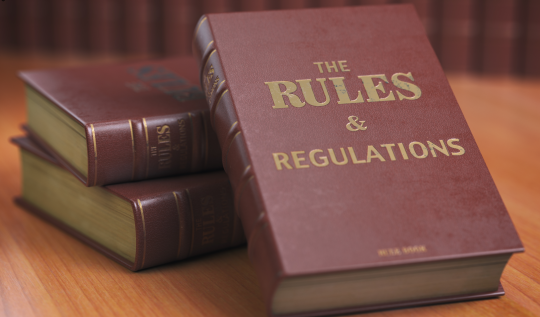
The Declaration establishes the association and defines what the HOA maintains versus what individual homeowners own and maintain themselves. The Bylaws govern how the board operates, covering how elections happen, how meetings get called, and how votes are counted. The Rules and Regulations set the day-to-day standards homeowners are expected to follow.
Together they tell you what the board can and cannot do, and how decisions are supposed to get made.
What to look for on your first read
You don’t have to memorize them. You do have to know what’s in them.
Know who maintains what. Know what requires a homeowner vote versus a board vote. Know what your insurance covers, and more importantly, know what it doesn’t.
The number of times I’ve seen a board make a decision it couldn’t legally make, because nobody had read their own documents, is significant. If there’s one homework assignment for your first 30 days, this is it.
The mailbox problem, and the mistake most new board members make
This one is very real, and I want to spend a minute on it, because I’ve seen it destroy communities.
You live in your community. You see your neighbors at the mailbox, at the dog park, at the gym if you have one. And they are going to tell you things. The landscaping has been inconsistent. The management company doesn’t answer email fast enough. The guy in building three has been parking in two spots for months.
Then they’re going to look at you, because you’re on the board, expecting you to do something about it.
How to respond when a neighbor stops you
Here’s the rule.
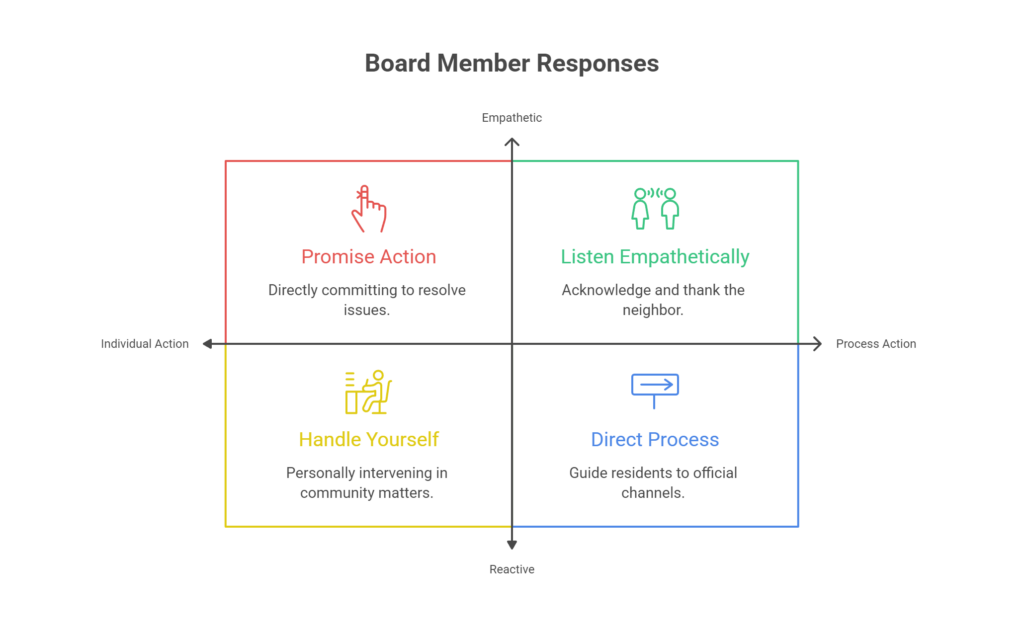
Listen with empathy. Act through process.
In practice that means you acknowledge the person, you thank them for telling you, and you point them toward their community manager or the next board meeting.
What you can’t do is promise action on the spot. What you also can’t do is go handle it yourself.
For more on building durable habits between a board and its residents, we’ve written about common communication issues between HOA boards and residents.
What happens when you promise action on the spot
That neighbor tells three other neighbors exactly what you said you’d take care of. Your manager knows nothing about it. The rest of the board knows nothing about it.
And when it doesn’t happen the way you described it at the mailbox, you’re the one who looks like they failed. Not the process. Not the management company. You.
The process exists to protect you just as much as it exists to serve the community.
How HOA boards make decisions
Authority belongs to the board, not to you
This is the one that trips up experienced board members, not just new ones. As an individual board member, you don’t have authority. The board has authority.
Decisions get made in meetings that are properly noticed and properly documented. The board votes. The majority rules. That structure is what gives any decision its legitimacy.
What to do when you disagree with a board vote
You vote your conscience in the meeting. That’s what the vote is for.
If it goes against you, the board has made a decision, and you now have an obligation to support that decision publicly. Not because you’ve changed your mind. Because you’re part of a governing body, and governing bodies that undermine their own decisions in public destroy trust. With the community. With the management company. With vendors. With everyone.
That’s what it means to serve.
How HOA boards make decisions
Authority belongs to the board, not to you
This is the one that trips up experienced board members, not just new ones. As an individual board member, you don’t have authority. The board has authority.
Decisions get made in meetings that are properly noticed and properly documented. The board votes. The majority rules. That structure is what gives any decision its legitimacy.
What to do when you disagree with a board vote
You vote your conscience in the meeting. That’s what the vote is for.
If it goes against you, the board has made a decision, and you now have an obligation to support that decision publicly. Not because you’ve changed your mind. Because you’re part of a governing body, and governing bodies that undermine their own decisions in public destroy trust. With the community. With the management company. With vendors. With everyone.
That’s what it means to serve.
HOA board burnout is structural, not personal
I’m going to be honest with you about something. Being a board member is a lot.
The always-on pressure nobody warns you about
The time commitment is heavier than most new members expect, and that’s before you account for the mental load of carrying your neighbors’ frustrations home with you.
There’s an always-on pressure to this role that nobody prepares you for. Every time you walk to the mailbox. Every time you see a neighbor at the grocery store. Every time someone sends you a message that starts with “hey, quick question.” The triggers are everywhere, because you live there.
How to set limits without checking out
You’re going to need to set limits. Not because you don’t care, but because the people who don’t set limits are the ones who burn out, resign, and leave the board worse off than when they started.
Use your management company. Direct the communication through proper channels. Let the system do its job.
You being reachable 24 hours a day is not a service to your community. It’s a path to you not being on the board in six months.
The goal is for you to be a great board member for a long time. That requires you to be sustainable.

Your first 90 days checklist
Here’s what the first three months look like in sequence.
- Read the Declaration, Bylaws, and Rules and Regulations cover to cover within your first 30 days.
- Meet your community manager and learn the correct channel for submitting requests and routing homeowner concerns.
- Confirm your understanding of what the board decides versus what the management company executes.
- Review the current year’s budget and ask your manager to walk you through any line items that aren’t clear. Our guide to reading HOA financial reports is a useful place to start.
- Ask when the most recent reserve study was completed, and read the findings.
- Find out what your community’s insurance covers, and specifically what it doesn’t.
- Learn how board meetings are properly noticed and how minutes get recorded and approved.
- Decide now, before someone stops you at the mailbox, exactly what you’ll say when a neighbor brings a complaint directly to you.
- Set your personal availability limits before the pressure builds to the point where you feel obligated to be reachable at all hours.
Put this somewhere you’ll see it again. Most of these questions get urgent the moment the first real issue lands on the board.
Why HOA board service matters
I want to close on this, because I think it’s important.
Across the country, people volunteer their time on HOA boards so their neighbors’ homes stay maintained, their communities run well, and the investment they’ve made in the place they live is protected. Most of them don’t get thank-you notes. Most of them deal with more frustration than gratitude.
But the communities that are run well, the ones with thoughtful, informed board members, are the ones that hold their property values. They’re the ones where neighbors feel a sense of connection.
We’ve been doing this work in Colorado since 1979, and the pattern holds. You have more influence over the quality of life in your community than you probably realize.
That’s not a burden. That’s an opportunity.
Questions I hear most from new board members
-
What are the main responsibilities of a new HOA board member?
A board member sets policy, approves budgets, and makes the decisions that direct the association. The management company handles execution and day-to-day operations. Your legal obligation is to act in the best interests of every homeowner in the community, not just the ones who elected you.
-
Can an individual board member make decisions or promises on their own?
No. Authority belongs to the board as a body, exercised through votes taken in properly noticed and documented meetings. An individual member who promises action to a neighbor has committed the association to nothing, and has usually created a problem for the manager, the board, and themselves.
-
What should a new HOA board member do in the first 30 days?
Read the Declaration, Bylaws, and Rules and Regulations, then meet your community manager and learn how requests are supposed to be routed. Those two steps prevent most of the mistakes new board members make in their first year.
Welcome to the board
Read the documents. Trust the process. Work with your management team. Set some limits.
And remember, you’re doing something that actually matters.
If your community needs support, or if anything here raised a question about where you stand with your current management situation, I’d like to hear about it.
Reach us at (303) 733-1121 or support@accuinc.com, or see how we work with Colorado boards.
Related resources
We’ve covered several of these topics in more depth elsewhere.
About James Phifer
James Phifer is the owner and CEO of ACCU, Inc., a family-owned Colorado community association management company in business since 1979. With 22 years of experience, he specializes in turning around aging, under-reserved condominium communities through disciplined budgeting, reserve planning, and insurance claims strategy, and he teaches boards across the country through his HOA Life platform. Read James’s full bio here.